




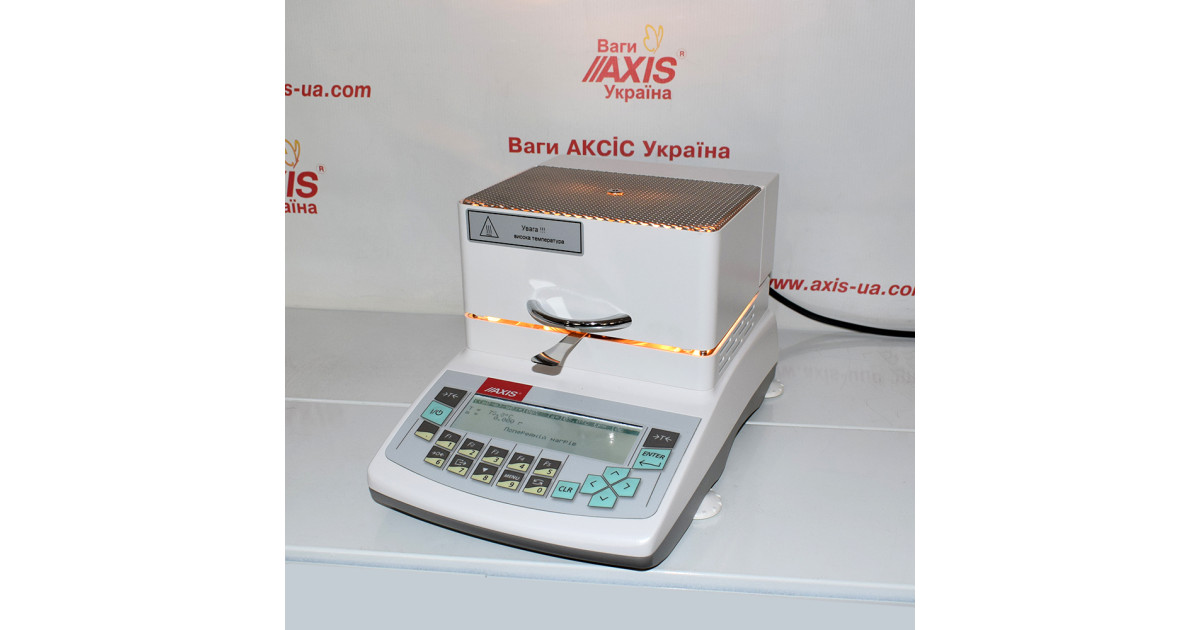
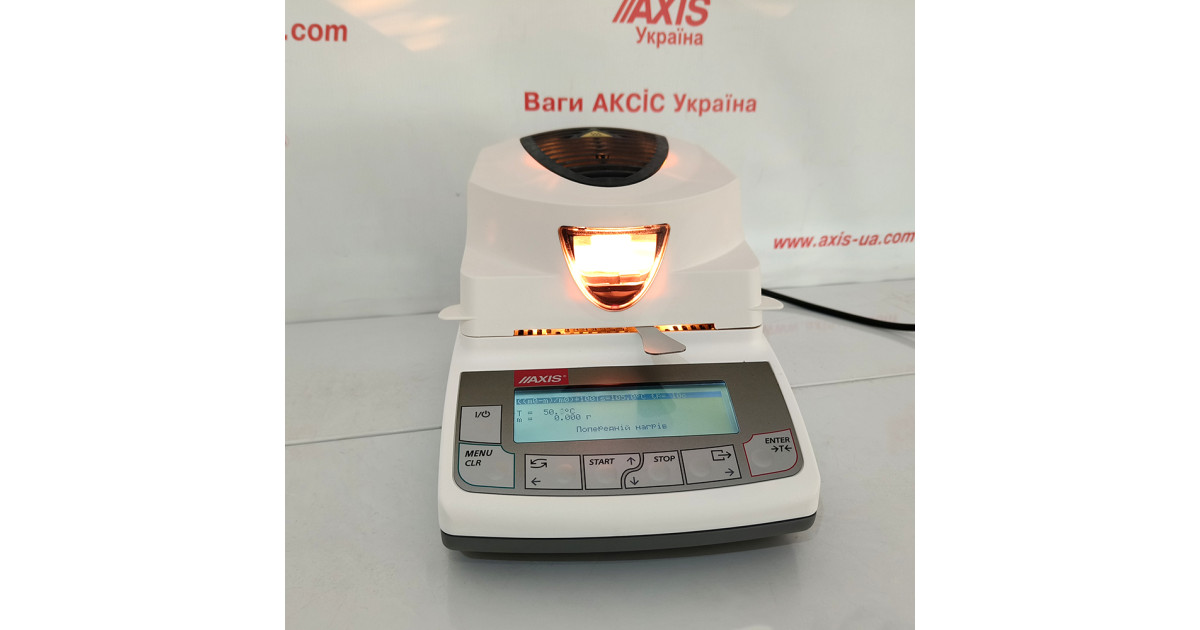
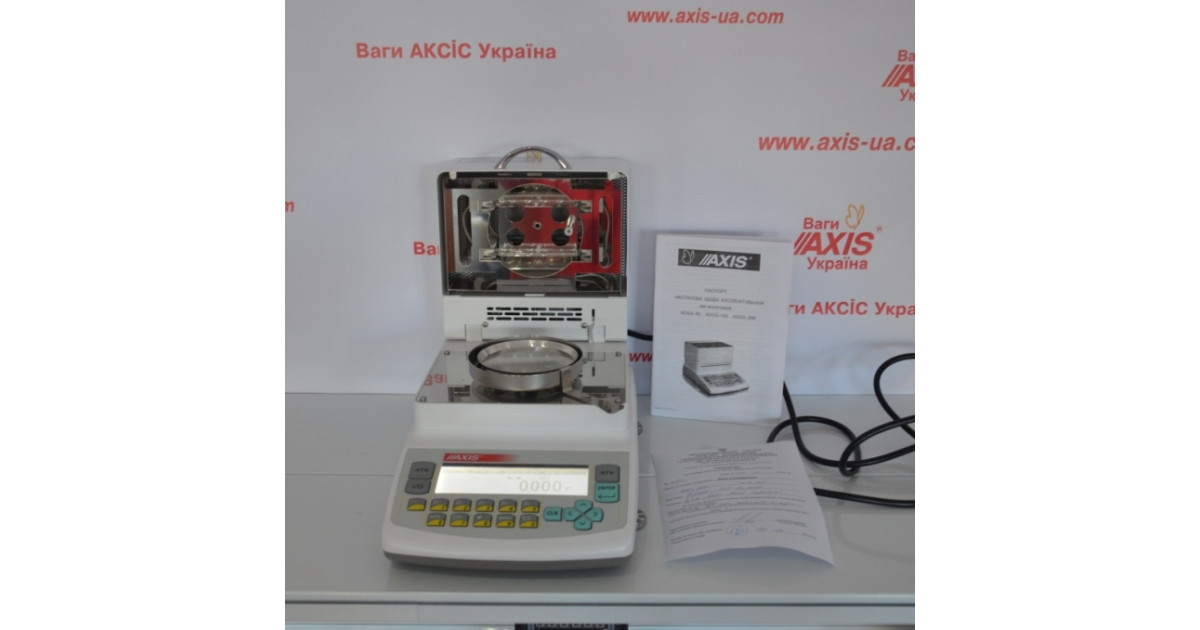
Hydrometer scales ADGS120/T250G (AXIS)
$ 95.27
Analyzers of humidity ADGS100 / T250 are used to quickly and accurately analyze the moisture content of materials and substances in laboratories, in the production process while monitoring product quality, etc. The moisture scales consist of laboratory weights of the 3rd class of accuracy in accordance with GOST 24104 and a drying device built above them that allows using them both as traditional laboratory scales and as an automated device for determining the moisture content in samples of substances and materials by means of thermogravimetric method, which consists in determining the mass of a sample of a substance before and after its drying by heating. Program for working with PROMas moisture meters. Specifications Weighing scales ADGS100 / T250 The highest weighing limit (LEL), g 100 The smallest weighing limit (NmW), g 0.02 Discreteness of reading (d), g 0.001 Choice of tare weight, g -100 The accuracy class (according to GOST 24104-88) 3 Type of indicator Graphic Operating temperature range, ° С 18 ... 33 Discreteness of moisture determination (%) 0.01 Number of operating modes 6th Maximum drying temperature, ° С 250 Interval between weighings, sec 1 ... 180 Maximum drying time, year 10 Heat source power, W 2x200 (halogen lamps) Size weighing bowls, mm 90 Drying chamber size, mm 108x20 Overall dimensions, mm 235x345x200 Food 220V, 50Hz Weight, kg 7th Functionality The moisture content can be calculated using the following formulas: B [%] = (ms-ma) / ms * 100% is the ratio of the mass of evaporated moisture to the initial mass of the sample; B [%] = (ms-ma) / mа * 100% the mass of evaporated moisture to the residual mass of the sample; B [%] = ms / ma * 100% the ratio of the residual mass of the sample to the initial mass of the sample; Where,ms - initial mass of the sample;ma - mass of the sample (mass values at the moment). The user can: Choosing a calculation formula; Setting the drying temperature; Programming conditions for automatic completion of the drying procedure. Areas of use Research laboratories; Enterprises; Institutions for quality control of goods and services; Conservation facilities.
Read More
 Hydrometer scales ADGS60 / T250G (AXIS)
 Hydrometer scales ADS60G (AXIS)
 Hydrometer scales ADGS60G/IR (AXIS)
 Ohaus MB120 – Moisture Analyzer, MB120